 Catlab Videos
Case Study: Xsights Digital Trade Show Video Series
THE CONTEXT
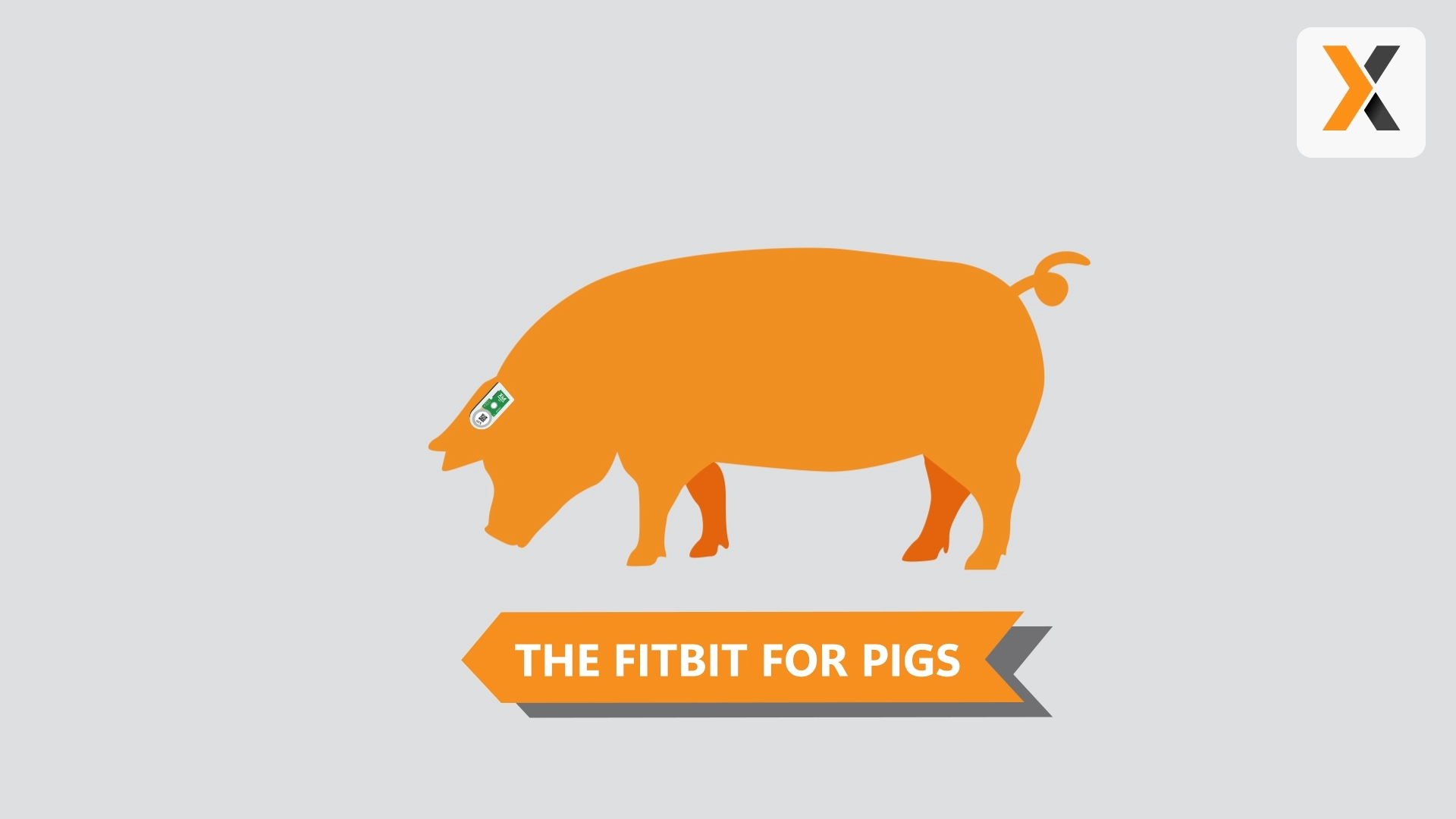
Xsights Digital builds precision pig monitoring technology — an IoT ear tag system called Xiot Tag (positioned as “the Fitbit for Pigs”) that tracks individual animal ID, activity, dwell time, location, and temperature in real-time, feeding data into their XLM platform (Xsights Livestock Management).
In an industry where most precision livestock tools track metrics in isolation — movement here, temperature there — Xsights’ patented system integrates them. That integration matters: with global food security demanding more efficient protein production, early disease detection in commercial pig operations isn’t a nice-to-have. It’s economic survival.
Xsights needed 3 videos for international agricultural trade shows, with deployment across multiple language markets.
THE REAL CHALLENGE (NOT THE BRIEF)

The brief asked for “explainer videos showing the product features.”
But the real challenge was harder. Xsights’ value lives in integration — the way ID + activity + temperature + location + dwell time combine to surface insights no single signal could reveal. How do you communicate a multi-signal IoT system to a commercial pig farmer walking past a trade show booth at 3–5 second glance speed, in a noisy hall, often without sound?

Most agritech demo videos fail in this context. They’re built for desktop attention spans — dense information, narrative arc, sound-dependent. None of which work in a trade show environment where:
- Visitors glance, not watch
- Sound is unreliable
- Distance viewing is the norm
- International audiences mean reduced text reliance
Listing features doesn’t work. Showing one signal at a time loses the integration story. That was the strategic puzzle.
THE STRATEGIC FRAMEWORK
The Insight:
I’d been studying trade show booth dynamics. Most explainer videos optimize for sustained attention — viewer sits, watches start to finish. Trade show booths reverse the dynamic entirely. Visitors walk, glance, decide whether to engage in seconds.
For Xsights specifically, I had to add another constraint: the videos would deploy in international markets, so visual storytelling had to carry weight that text usually does.
The Framework:
I proposed Glanceable Frame Architecture — 4 design rules for high-density visual environments:
→ Rule 1: One idea per frame, never two
Most explainers cram product feature + benefit + use case into single frames because they’re built for re-watching. Trade show viewers don’t re-watch.
→ Rule 2: Visual carries 80%, text carries 20%
For international deployment especially, text becomes a liability. The Xiot Tag’s value had to be felt visually first, explained textually second.
→ Rule 3: Loop-friendly — viewer can join at any 5-second point
Trade show videos play continuously. Designing for “start anywhere” rather than “start at beginning” changes the entire architecture.
→ Rule 4: Sound-optional design
Everything must work in silence. If sound enhances, great. If it’s required, the video fails in environment.
THE EXECUTION
The 3-video architecture mapped to Xsights’ product narrative:
Video 1: The Xiot Tag (the hardware)
Introduced the IoT ear tag itself — what it is, how it attaches, what it captures. Pure visual demonstration showing the tag in action on real pigs, no narration required. Established the physical foundation before introducing software layer.

Video 2: The XLM Platform (the software)
Showed how Xsights Livestock Management transforms tag data into actionable intelligence — dashboards, alerts, mobile access. Designed for loop-friendliness so the platform’s “aha moment” remained visible regardless of where viewer joined.

Video 3: The Outcome (capabilities + message)
Showcased the complete value proposition with anchor message: “Manage your pigs in real time.”
Communicated through visual progression:
- Health, activity & movement tracking
- Every action fully logged
- Manage your pigs, measure your staff
- True traceability
- Find your pig in seconds (LED tag locator)
- No guesswork
This third video carried the strategic weight — it had to consolidate hardware + software into a single confidence-building message that worked at glance speed.

Production approach: Hybrid workflow — traditional animation craft for brand-critical visual elements, AI-assisted generation for complex multi-character scenes and visual reference development. The hybrid approach allowed deeper creative iteration on the framework execution while maintaining tight production timelines.
Style: Clean illustrative animation, brand-consistent, minimal copy, optimized for booth deployment.
THE OUTCOME
- Delivered ahead of contracted timeline
- Positive client feedback with 5-star project rating
- Videos deployed at agricultural trade shows internationally
- [Client testimonial — to be added after Xsights review]
THE LESSON FOR B2B TECH MARKETERS
The lesson applies beyond Xsights:
Trade show video isn’t a smaller-budget commercial. It’s a fundamentally different medium with different rules. Information density that works on YouTube actively hurts you in a physical booth — and the more sophisticated your product, the harder this becomes.
For AgriTech, IoT, and hardware companies with integrated multi-signal systems, the temptation is to “show everything” to demonstrate technical sophistication. That’s exactly backwards. The more capable your product, the more disciplined your communication needs to be in environments where viewers have seconds, not minutes.
Treat trade show video as a separate craft — not a stripped-down version of your hero video. The architecture comes first. Visual style second.
When done right, sophisticated technology becomes glanceable — without losing what makes it sophisticated.


